Ref: Status and role of Local Place Plans (LPPs) as of 20th May 2026.
Background:
Given the continued ambiguity surrounding the understanding of the role of LLPs (within the Local Development Plan) the timescale for delivery and the requirements to produce – A&A Connected have reached out to Perth and Kinross Council LPP leads for clarification. The following information has been acquired by Alan Campbell Chair of A&A Connected following a face-to-face meeting with Sharon Rice Jones who is the External Funding, Performance Monitoring and Team Leader at PKC and email correspondence between Sharon Rice Jones and Dante Sosa, The Planning Officer (Development Plans) PKC. [1].
Key items requiring clarification:
- What’s the status with LPP’s within the planning strategy? Despite initial advice to central government that LPP should be easy for communities to deliver, there is an acknowledgement that communities are required to drive the development and consultation of the plans. As evidenced by the very poor uptake. Out of the many communities in PKC, only four have registered an LPP, although a few more are being prepared.
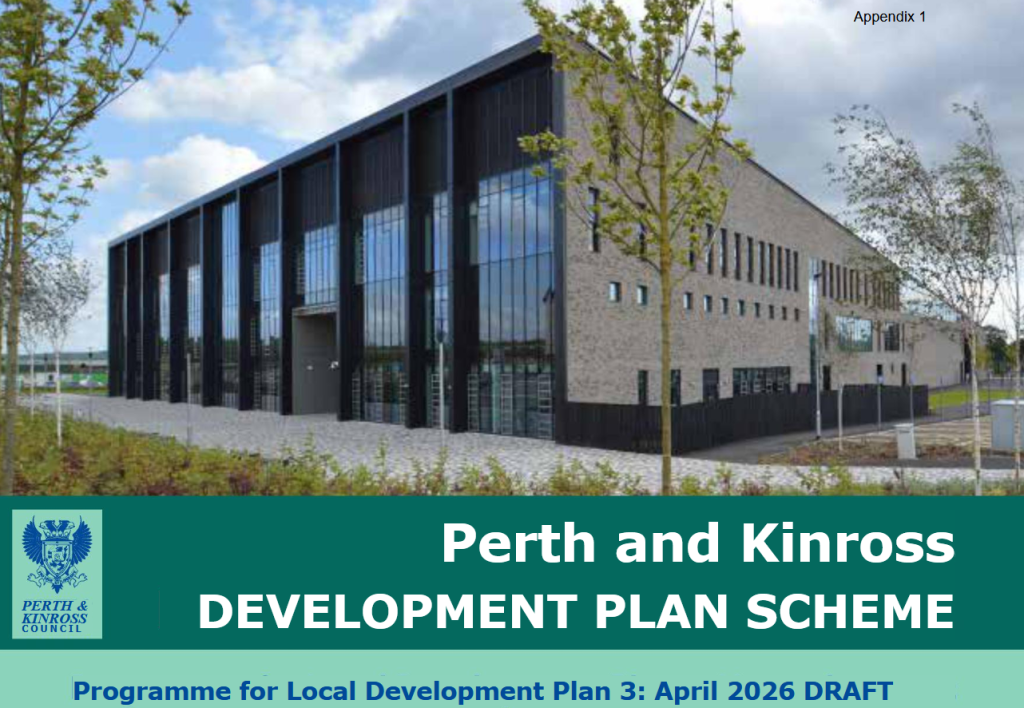
- What is the timeframe for producing a LPP? LPPs can be prepared and registered at any time in the LDP cycle and may become a material consideration when assessing planning proposals. For the opportunity to influence Local Development Plan 3, an LPP would need to be registered in time to inform the collaborative preparation of the proposed plan. Indicative timeframes are outlined in the Development Plan Scheme (2026). It should be noted that the timeframes in the Development Plan Scheme are indicative. PKC’s Evidence Report (ER) is still with the DPEA at the Gatecheck stage, and procedurally they are unable to progress key stages of engagement until the ER is approved. While PKC do not have an official cut-off date for LPPs, Dante Sosa would encourage us to aim to have this submitted for registration by no later than autumn 2026. PKC have said they can arrange regular updates to give sight of the proposals likely to be included.
- Is there funding to support the development of Local Place Plans? Central government doesn’t provide PKC with funding to assist in delivering LPPs. The funding for Community Led Local Development for this year hasn’t been confirmed yet but Sharon Rice Jones expects this soon and will allocate a portion of funding for our LLP if the community decides to proceed.
- How is an LLP created? Preparation of an LLP can either be done through a consultant or by the community themselves. There are pros and cons to each. The community will lose a degree of control over the format and content of an LPP if they bring in a consultant, but this is far less work for volunteers and doesn’t require them to have specialist planning knowledge. Also, there may be a degree of mediation required between various community ‘groups’ during the LPP preparation process and this can have a profound effect on the community if volunteers that live in that area must do this (this has torn communities apart elsewhere). This activity would be better undertaken by a consultant. Sharon Rice Jones will be providing contact details for two people that have been involved in preparing LPPs and who can give some feedback on the process and impact this had on their communities.
- Is a LPP a live document that requires regular reviewing and updating? The LPP regulations do not prescribe a lifecycle for updating or renewing these documents, so there is no statutory timeframe. However, new-style LDPs have a 10-year lifespan, and so PKC would encourage communities to refresh LPPs in time to influence the next LDP cycle.
- Will the LPP stop new housing developments? LLP’s cannot stop developments. They are simply another way for the community to voice their preferences on how their area should be developed – like the information in the CAP but in planning language. In Sharon’s experience, areas with a strong CAP are generally well covered by this document during the Local Development Planning process as this already provides the view of the communities. It’s the communities that have neither a CAP nor an LPP that struggle to control development in their area as there is no agreed set of priorities and single community voice.
- If we decided to go ahead as a community to produce an LLP who could support us? Consultants that could create an LPP are Community Enterprise, Place at the Table and Star (who helped with the CAP). We only need to ask three consultants for comparable quotes, even if only get one quote back we can still proceed if we are happy with that consultant.
- What are the costs associated with an LLP? Consultants that could create an LPP are Community Enterprise, Place at the Table and Star (who helped with the CAP). We only need to ask three consultants for comparable quotes, even if only get one quote back we can still proceed if we are happy with that consultant.
- Is there any short term solution if the community is unable to agree on next steps? There is a potential workaround in the short-term. We could extend the period that the current CAP covers, adding an addendum to reflect the current situation with live issues (particularly the spatial elements). This would take less time, and we could employ Star to help with this (Sharon Rice Jones has funding for this from another pot part of CLLD). We’d likely still need to ask the community for additional help, though.
[1] This information is to be treated as reliable based on the understood responses provided to A&A Connected by PKC as of 20th May 2026. A&A Connected cannot be held responsible for any changes to this nor can be held liable or quoted on any misinformation that may have been provided.